
Our specialities/Vascular surgery
Private vascular surgery clinic in Balatonfüred
If you have varicose veins, heavy legs, recurrent leg swelling or leg pain when walking, a vascular surgery assessment can help clarify the cause of your symptoms. At the private vascular surgery clinic of Tagore Medical Center in Balatonfüred, two experienced specialists diagnose and treat vascular diseases. Where needed, on-site Doppler ultrasound, colour Doppler imaging and BOSO ABI measurement can support a more precise assessment of arterial and venous circulatory abnormalities.
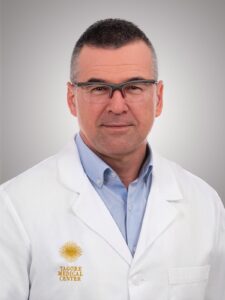
- Two experienced vascular surgeons with a surgical background: Dr. Oroszlán Zsolt and Dr. Szuromi Péter
- Colour Doppler ultrasound of the limb and neck vessels
- Outpatient varicose vein treatments, ultrasound-guided sclerotherapy and foam sclerotherapy
- BOSO ABI measurement to detect peripheral arterial disease of the legs, with aortic pulse wave velocity (PWV) measurement
- Assessment and treatment of venous leg ulcers, lymphoedema and venous conditions in athletes
- Varicose veins in pregnancy, vascular care for people with diabetes, vascular status and risk assessment for smokers
- Immediate arrangement of further care pathways where needed
When should you see a vascular surgeon?
Vascular surgery deals with the diagnosis and treatment of diseases of the arteries and veins. This includes arterial narrowing, venous disease, aneurysms and circulatory complaints persisting after thrombosis. The treatment method depends on the vessels affected, the severity of the abnormality and your general health.
Read moreShow less
A vascular surgery assessment is recommended, among other things:
- for calf or thigh pain that comes on when walking and eases with rest, or a decreasing walking distance;
- for dilated, twisted varicose veins or persistent heaviness in the legs;
- for recurrent swelling of the ankles or lower legs;
- for brownish discolouration, itching or eczema-like changes of the skin on the lower leg;
- for a slow-healing leg wound or leg ulcer;
- for leg swelling or tightness persisting after a previous thrombosis;
- for arterial narrowing or an aneurysm shown on ultrasound or CT;
- for lymphoedema or suspected lymphoedema;
- alongside diabetes, smoking or another significant vascular risk factor, if an assessment of the circulation in the legs is warranted.
In atherosclerosis, the walls of the arteries undergo abnormal changes, become stiff and calcified plaques form. This reduces the internal diameter of the arteries, significantly impairing the blood supply to tissues, which can lead to serious complications. Symptoms vary depending on the part of the body affected: in the legs, pain, reduced walking ability and leg wounds may occur, while involvement of the carotid arteries in the neck can cause transient or permanent neurological symptoms, even a stroke. To avoid serious complications, early detection and treatment of arterial narrowing is important.
In venous disease, faulty vein valves allow some of the blood to flow backwards, and the superficial veins may become dilated. The condition is common, and unpleasant symptoms can appear even at a young age. Typical symptoms include heavy legs, leg swelling, night-time calf cramps and, in more severe cases, skin discolouration, varicose eczema or leg ulcers. Choosing the right treatment is guided by assessing the symptoms together with the ultrasound findings. Varicose veins are not only a cosmetic problem: left untreated, they can also cause serious complications.
You can also request a consultation for spider veins and other cosmetically bothersome superficial vein dilations. If you have diabetes, smoke or have a known vascular disease, it is worth discussing with the specialist whether an assessment and follow-up are needed. A simple, painless BOSO ABI test and, where needed, a colour Doppler ultrasound can help detect peripheral arterial disease of the legs early.

What does a vascular surgery consultation involve?
During the consultation, the specialist reviews your complaints, previous illnesses, operations and test results, as well as the medicines you take regularly. It is important to know when the symptoms started, whether they get worse with walking or prolonged standing, and whether they ease with rest. Please tell us if you have had a thrombosis, have diabetes, smoke or take anticoagulant medication.
During the physical examination, the doctor inspects the affected limbs, the condition of the skin, any swelling and visible vein dilations, and checks the pulses in the arteries. Depending on your complaints and the physical findings, the assessment may be complemented by BOSO ABI measurement, Doppler ultrasound or colour Doppler ultrasound.
Based on the results, the specialist explains the treatment options. The plan may include lifestyle changes, medication or compression therapy, or a procedure. If further imaging or surgical treatment is needed, you will be informed about the next steps.
Vascular surgery tests and treatments

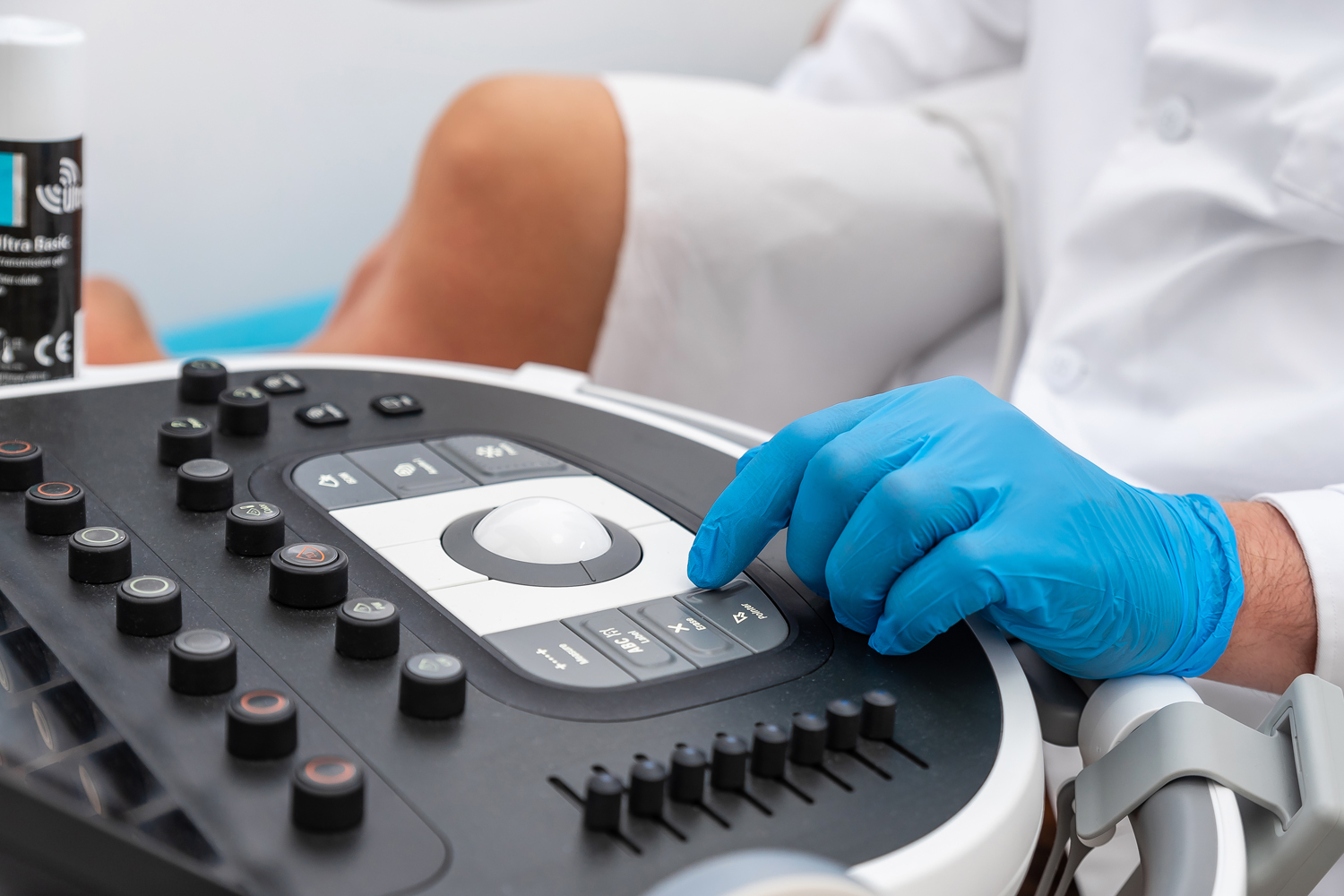
Colour Doppler ultrasound
Colour Doppler is a special ultrasound examination that provides information not only about the structure of the blood vessels but also about the direction and speed of blood flow within them. Colour Doppler ultrasound is an important tool for detecting arterial and venous circulatory abnormalities. For venous complaints, it shows whether the veins are open and whether blood is flowing backwards; if arterial disease is suspected, it provides information about circulatory abnormalities. The result also plays an important role in planning treatment. The specialist decides which vessels to examine and which type of test is needed based on your complaints. Colour Doppler can be used to examine the vessels of the legs and arms, as well as the carotid arteries in the neck, among others.
Ankle-brachial index and arterial wall assessment
Arterial narrowing does not only affect the coronary arteries of the heart: by narrowing the arteries of the legs, it can cause peripheral arterial disease, which in its most severe form often ends in amputation as a last resort. In Hungary, around 6,000 amputations are performed each year, nearly half of which could be prevented through timely screening and treatment of peripheral arterial disease, which is often symptomless. Blood flow in the legs can be characterised by a simple, accurate measurement called the ankle-brachial index (BOSO ABI). A value of 0.90 or less indicates peripheral arterial disease in the legs, and below 0.5 a very severe circulatory disorder, even at rest, is likely.
During BOSO ABI measurement, blood pressure is measured automatically on all four limbs almost simultaneously and the ankle-brachial index is calculated. The test is quick and painless, and is one of the simplest methods of screening for peripheral arterial disease of the legs. At Tagore Medical Center, we measure the ankle-brachial index with the automated BOSO ABI method, which assesses all four limbs simultaneously and can be confirmed or refined with Doppler ultrasound where needed. The BOSO ABI test can be a useful complementary test mainly for suspected arterial narrowing, leg pain when walking, diabetes, smoking or increased cardiovascular risk.
In addition to the ABI, the BOSO device analyses the elasticity of the wall of the aorta, the main artery leaving the heart (aortic PWV); this elasticity (aortic stiffness) is an independent predictor of arterial disease and cardiovascular events. A value above 10.0 m/s indicates a stiffer, less elastic aorta, which places the patient in a higher risk group. If the BOSO ABI measurement shows an abnormality, we evaluate the result together with the clinical picture and, where needed, refine it with Doppler or colour Doppler ultrasound.
Varicose vein treatment and sclerotherapy
In sclerotherapy, the doctor injects a substance into the affected vein that causes it to close. In foam sclerotherapy, the active substance is injected in the form of a foam, with ultrasound helping to guide the treatment. Depending on the extent of the problem, several sessions may be needed. Before the procedure, you will be informed about the expected results, possible side effects and aftercare.
Compression stockings can help relieve venous symptoms and complement treatment, but on their own they do not remove dilated veins. Their type, strength and wearing time should follow medical advice. At the clinic, vascular assessment and personalised treatment recommendations are also available for venous leg ulcers, varicose veins associated with pregnancy and lymphoedema.
Examinations and prices
These examinations can be booked right now, and prices are updated from our booking system. All examinations in this speciality open with one click below the list.
Examinations and prices
Specialist consultation with Doppler ultrasound
Vascular surgery specialist consultation with detailed Doppler ultrasound
Vascular surgery specialist consultation
Review of medical history, assessment of complaints, targeted physical examination
Vascular surgery follow-up consultation
Available within 2 months of a specialist consultation at our clinic
Prices are in Hungarian forints (HUF) and include VAT. The laboratory package prices shown include the applicable sample handling or sample collection fee.
Try a different search term, or call our team on +36 20 280 3939 for assistance.
All examinations in this speciality15 items
Basic examinations
-
Short vascular surgery consultation
HUF 16,500
Includes a healthcare administration fee of HUF 2,500
-
Vascular surgery specialist consultation and injection treatment of varicose veins (sclerotherapy, 1 ampoule)
HUF 36,990
Review of medical history, assessment of complaints, targeted physical examination, injection treatment of varicose veins, healthcare administration fee
-
Vascular surgery specialist consultation with ankle-brachial index measurement
HUF 34,990
Review of medical history, assessment of complaints, targeted physical examination, ankle-brachial index measurement, healthcare administration fee
-
Vascular surgery specialist consultation with detailed ultrasound
HUF 37,500
Review of medical history, assessment of complaints, targeted physical examination, detailed Doppler ultrasound with a Philips Affiniti 70 DS device, healthcare administration fee
-
Vascular surgery specialist consultation with detailed ultrasound and ankle-brachial index measurement
HUF 41,500
Review of medical history, assessment of complaints, targeted physical examination, Doppler ultrasound, ankle-brachial index measurement, healthcare administration fee
- Vascular surgery specialist consultation and ultrasound-guided foam sclerotherapy HUF 52,000
- Follow-up consultation and injection treatment of varicose veins (sclerotherapy, 1 ampoule) HUF 32,990
-
Vascular surgery initial or follow-up consultation with injection treatment of varicose veins: each additional ampoule
HUF 15,000
Fee for each additional ampoule beyond the first, for injection treatment of varicose veins in connection with an initial or follow-up vascular surgery consultation
-
Minor outpatient surgery
HUF 62,500
Surgical procedure under local anaesthesia, excluding histological examination.
- Histological examination: first sample HUF 19,000
- Histological examination: each additional sample HUF 15,000
-
Post-operative follow-up consultation
HUF 14,500
Removal of stitches, wound dressing, healthcare administration fee
-
Prescription writing
HUF 5,500
Prescription writing without consultation or examination; otherwise included in the specialist examination
- Specialist recommendation HUF 7,000
-
Urgent appointment surcharge
HUF 10,000
An appointment at the next available clinic session when the schedule is fully booked
Current fees for all examinations can be found on our price list page at any time.
When is urgent care needed?
Sudden, painful swelling of one leg requires urgent medical assessment; in this case, do not wait for a scheduled appointment. If it is accompanied by shortness of breath or chest pain, call 112. Sudden severe limb pain, or a limb becoming cold, pale or numb, also requires immediate care.
Frequently asked questions about vascular surgery consultations
What should I expect during the examination?
The affected limb must be uncovered for the examination, so it is best to wear comfortable clothing that is easy to remove. If you feel pain, tell the examining doctor. The consultation and any varicose vein treatment may be separate steps of care, which our specialist will discuss with you.
How long does the specialist consultation take?
The consultation usually takes 25 to 30 minutes.
How should I prepare for the examination?
Please bring your identity documents, your Hungarian social security (TAJ) card, previous vascular surgery and ultrasound reports, discharge summaries and a list of your medicines. Note when your symptoms started and, if your leg hurts when walking, roughly how far you can walk without stopping. If you take anticoagulants, ask separately for information about preparing for the planned procedure; do not change your medication on your own.
How much does a private vascular surgery consultation cost?
Current fees can be found in the vascular surgery price list. When booking, please check whether the chosen service includes an ultrasound examination and what any treatment will cost.
Which tests and treatments are available on site?
Vascular surgery specialist consultations, Doppler ultrasound of the limbs and neck, and outpatient varicose vein treatment, including ultrasound-guided sclerotherapy and foam sclerotherapy, are available. The appropriate test and treatment is decided on the basis of a specialist consultation.
Do all varicose veins need surgery?
No. Whether treatment is needed and which method is used is determined by your symptoms, the condition of your skin, the ultrasound findings and your individual circumstances. Lifestyle changes, compression therapy, injection treatment or surgery may all be options; the specialist will discuss the benefits and risks with you.
What should I look out for after sclerotherapy?
You will receive personalised guidance on compression, movement, sport and follow-up. Temporary bruising, tenderness or skin discolouration may occur. Sometimes several treatments are needed, and new varicose veins may appear later; lasting freedom from symptoms cannot be guaranteed.
Is a follow-up worthwhile after a previous thrombosis?
Yes, especially if you have persistent leg swelling, tightness or skin changes. A follow-up can help assess any remaining venous circulatory problems. However, new, painful swelling of one leg requires urgent assessment.
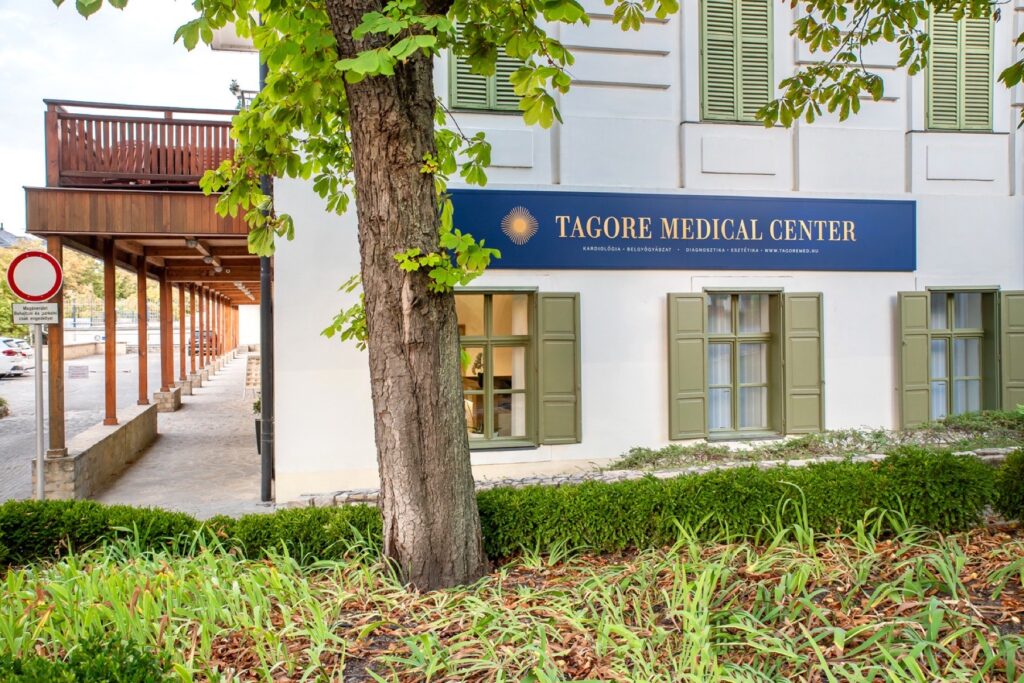
Where is the clinic?
- Address
- Tagore Medical Center
Balatonfüred, Horváth-ház, Gyógy tér 3. - Book an appointment
- +36 (20) 280 3939

Vascular surgery in Balatonfüred at Tagore Medical Center
If you are looking for specialist help with varicose veins, leg pain when walking or a known vascular disease, book an appointment at our private vascular surgery clinic in Balatonfüred. Based on the assessment, we will discuss possible treatment and next steps with you. Where needed, we also involve doctors from our other specialties.
Book an appointment online, or call us: +36 20 280 3939.
Book an appointment!
Early detection can save lives, and we will help you find the right solution.
Tagore Medical Center, Balatonfüred, Horváth-ház, Gyógy tér 3.
This information is general in nature and does not replace a personal medical examination, diagnosis or treatment. If you have symptoms, please consult a specialist.