
Our specialities/Dermatology
Private dermatology clinic in Balatonfüred
If you have recurring itching, rashes, spots or a mole that has changed, it is worth seeing a dermatologist. At Tagore Medical Center’s private dermatology clinic in Balatonfüred, we diagnose, treat and provide preventive check-ups for conditions of the skin, hair, scalp and nails. As well as investigating general skin complaints, our dermatological services include mole screening, the investigation of allergic skin symptoms and hair and nail problems, and outpatient treatment of certain benign skin lesions.
- Short waiting times
- Experienced, highly regarded specialists
- Modern ultrasound diagnostics and laboratory facilities
- Thousands of satisfied patients every year
- International clinical trial background, the latest therapies
When should you see a dermatologist?
Dermatology deals with the diagnosis and treatment of diseases of the skin and its appendages, the nails and hair, as well as connective tissue diseases, and also includes preventive screening. The skin can be an indicator of many internal diseases, so various skin symptoms can also help in diagnosing other conditions. Skin symptoms may be caused not only by a local skin condition but also by an infection, an allergic process or another organ disorder, so it is worth having a specialist examination if symptoms are persistent, recurring or changing.
Read moreShow less
A dermatological examination begins with taking your medical history, followed by a physical examination, which after a careful review of the skin may also include the mucous membranes. By palpation the doctor can assess how deep lesions on the skin extend and the condition of the lymph nodes. If needed, samples may be taken, for example skin or nail scrapings or swabs, and laboratory tests may also be needed to check the body’s internal functions. The diagnosis is then made and the next steps, including any further tests or procedures, are discussed.
A dermatological assessment is recommended for, among other things:
- a new mole, or one that is growing or changing in colour or shape, or a skin lesion that bleeds or does not heal;
- persistent redness, itching, scaling, recurring rashes or hives;
- inflamed, painful spots, acne causing scarring, or facial redness;
- increased or patchy hair loss, or persistent scalp problems;
- discoloured, thickened or brittle nails, warts and skin growths;
- recurring or persistent skin infections, or skin lesions that are slow to heal;
- the ongoing care of a known chronic skin condition, such as psoriasis or atopic dermatitis.

What happens during a dermatological examination?
The consultation begins with a review of your symptoms and history. It is important to know how long the problem has been present, what makes it worse or better, which products you have used and which medicines you take. Family history, sun exposure habits and known allergies can also help with the assessment.
The doctor examines and, where necessary, palpates the lesions; the examination may cover the entire skin surface, the mucous membranes or the lymph nodes. Where indicated, the consultation is supplemented by dermatoscopy, scrapings or swabs, or further tests. Depending on your symptoms, microbiological sampling, laboratory tests or allergy testing may also be needed. Finally, we discuss the treatment plan and whether a follow-up is needed.
How can a dermatological examination help?
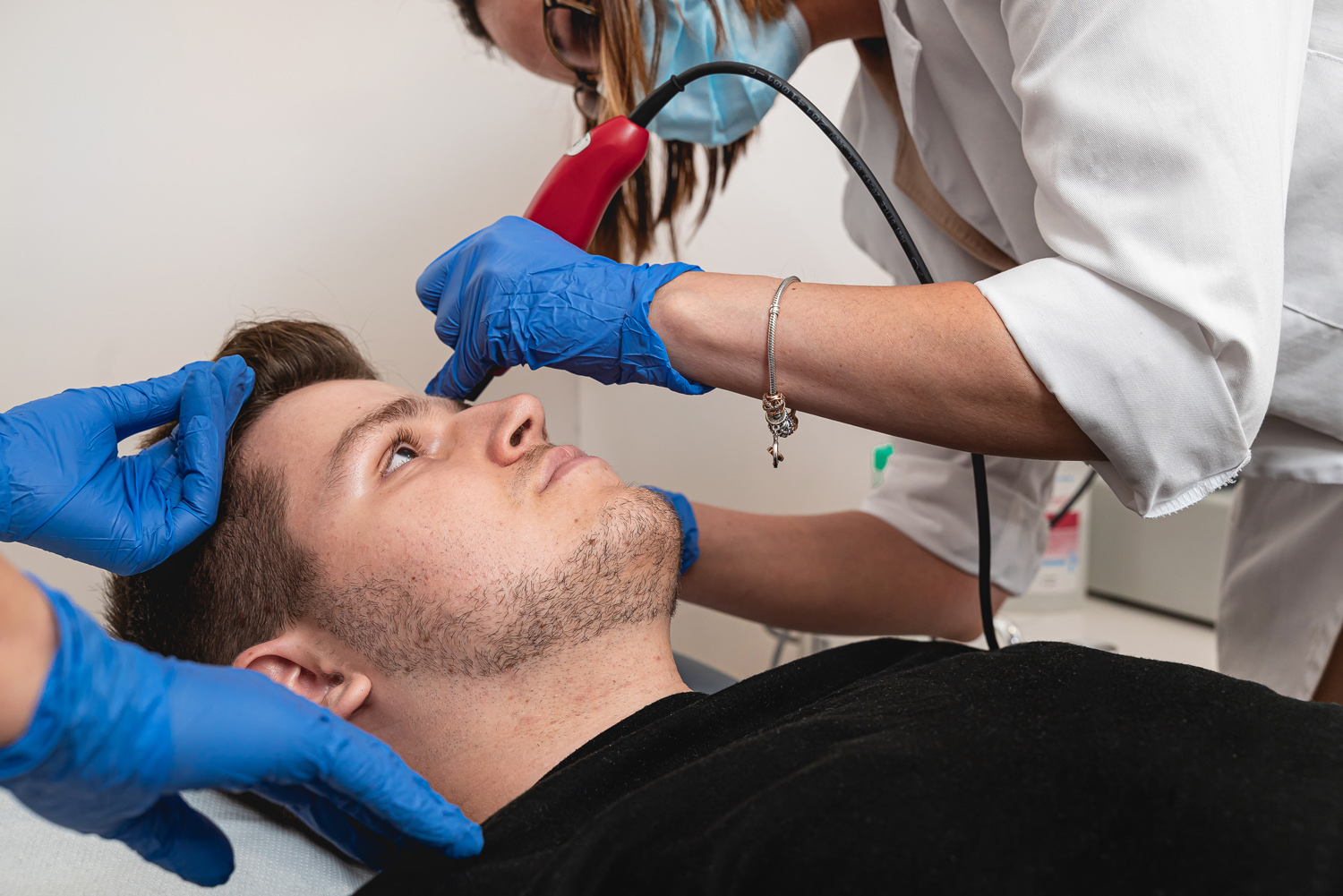
Some common skin conditions
Eczema. Eczema is one of the most common inflammatory skin conditions. The skin may become red and itchy, with scaling and small blisters. Scratching can cause wounds that may become infected; if it persists, the skin may thicken and become discoloured. It can have several causes, so identifying the triggers is an important part of treatment. Where indicated, allergy testing may also be needed, and treatment also includes appropriate skincare suited to your skin type.
Atopic dermatitis. Atopic dermatitis is a chronic inflammation of the skin based on an inherited predisposition, with periodic flare-ups. Dry, damaged skin is more easily infected. Atopic dermatitis is more often associated with hay fever, asthma, allergic conjunctivitis or other allergic conditions. Important parts of treatment are regular skincare, recognising the factors that make symptoms worse and, where indicated, allergy testing.
Acne, spot-prone skin. Acne mainly appears in areas rich in sebaceous glands: the face, chest and back. Blackheads, inflamed spots and, in more severe cases, nodules can develop. Starting the right treatment in time can reduce the risk of permanent scarring. Treatment may include appropriate skincare and cosmetic advice, including choosing cosmetics that suit your skin type.
Hair loss and scalp conditions. Increased or patchy hair loss can have many different causes. As well as examining the hair and scalp, the assessment may require laboratory, ultrasound or other supplementary tests, or the involvement of another speciality.
Nail conditions. Discoloured, thickened or brittle nails are often the result of a fungal infection, but they may also indicate another skin or internal condition. Fungal nail infection is not just a cosmetic problem: it can also sustain infection of the surrounding skin. An accurate diagnosis may require nail scrapings or other microbiological sampling.
Fungal, bacterial and viral skin infections. Skin infections can cause a variety of symptoms: redness, scaling, weeping, crusting, and clear or pus-filled blisters may all appear. Depending on the type and extent of the lesion, treatment may be topical or may require medication. To identify the causative organism more precisely, swabs, skin scrapings, laboratory tests or, in some cases, serological tests can be carried out.
Psoriasis. Psoriasis is a chronic inflammatory disease with an immunological background. Typically, inflamed plaques covered with silvery scales appear, often on the elbows, knees and scalp, although symptoms can also develop elsewhere on the body. Psoriasis does not affect only the skin: it may be associated with joint involvement, high blood pressure, thyroid or metabolic disorders and certain other inflammatory diseases. Treatment is tailored to the extent and severity of the condition; in more severe cases, modern systemic therapies are also available.
Rosacea. Rosacea is a chronic skin condition that mainly appears in adulthood, in the central area of the face. It begins with recurring or persistent redness, and later thread veins and inflamed papules and nodules may develop. Alongside treatment, appropriate skincare and recognising your individual triggers are important. Depending on the symptoms, laboratory or other supplementary tests may also be warranted.
Urticaria (hives). In urticaria, itchy, swollen weals of varying size appear suddenly on the skin and may merge over larger areas. Activation of mast cells in the skin plays a central role in the development of symptoms. Hives can be triggered by an allergic reaction, for example to certain foods, medicines or insect venom, but not all urticaria is allergic in origin: medicines, infections and other diseases may also be behind it. For recurring or persistent symptoms, identifying the cause may require laboratory tests, targeted inhalant or food allergy testing and, where indicated, imaging or the involvement of another speciality.
HPV vaccination. Some types of human papillomavirus (HPV) cause genital warts, while other types, in the case of persistent infection, can cause precancerous changes and certain cancers. HPV vaccination helps prevent diseases caused by the virus types included in the vaccine, but it does not treat an existing infection. At our dermatology clinic, Gardasil vaccination is available including the vaccine, its administration and personalised medical advice.
Mole screening
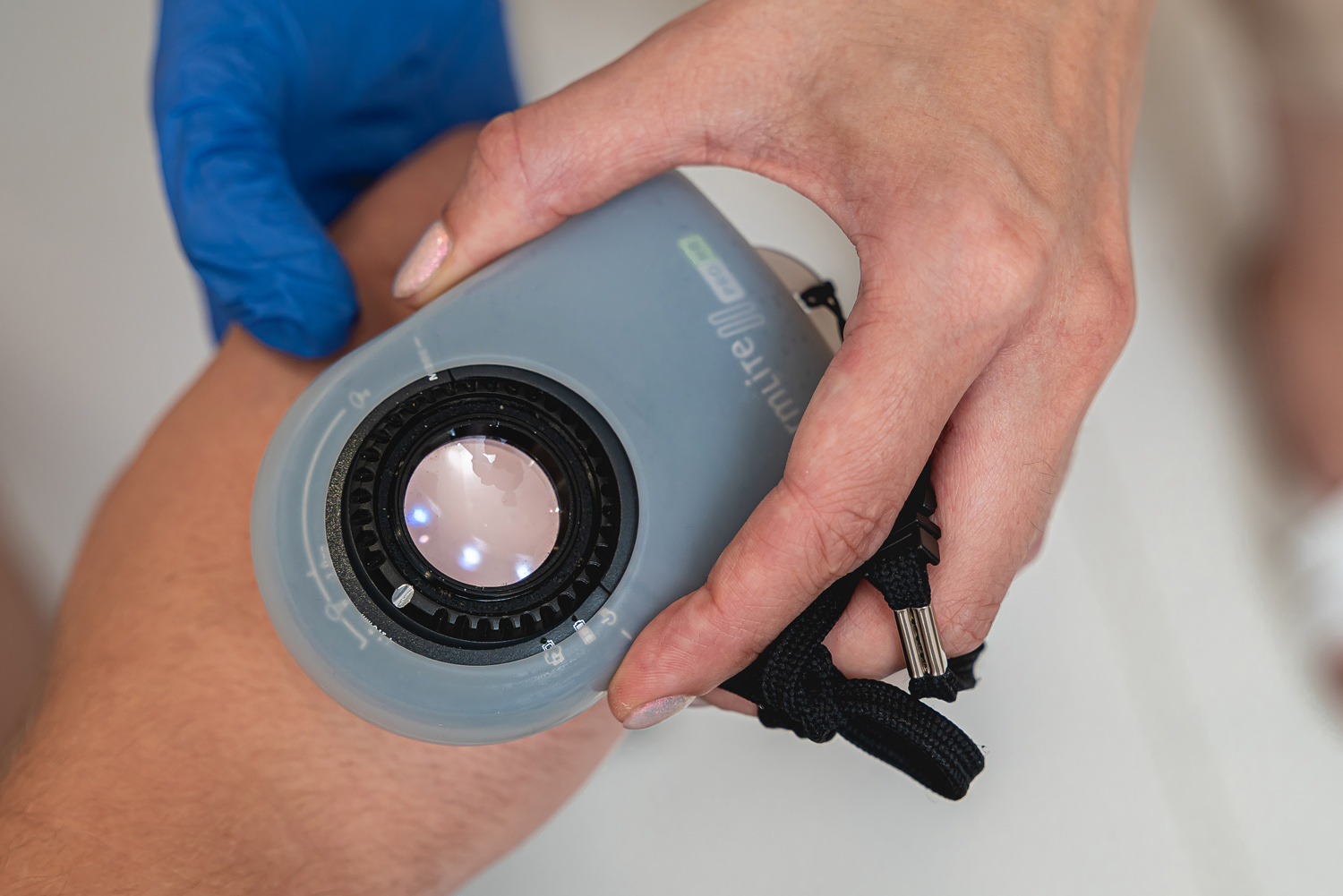
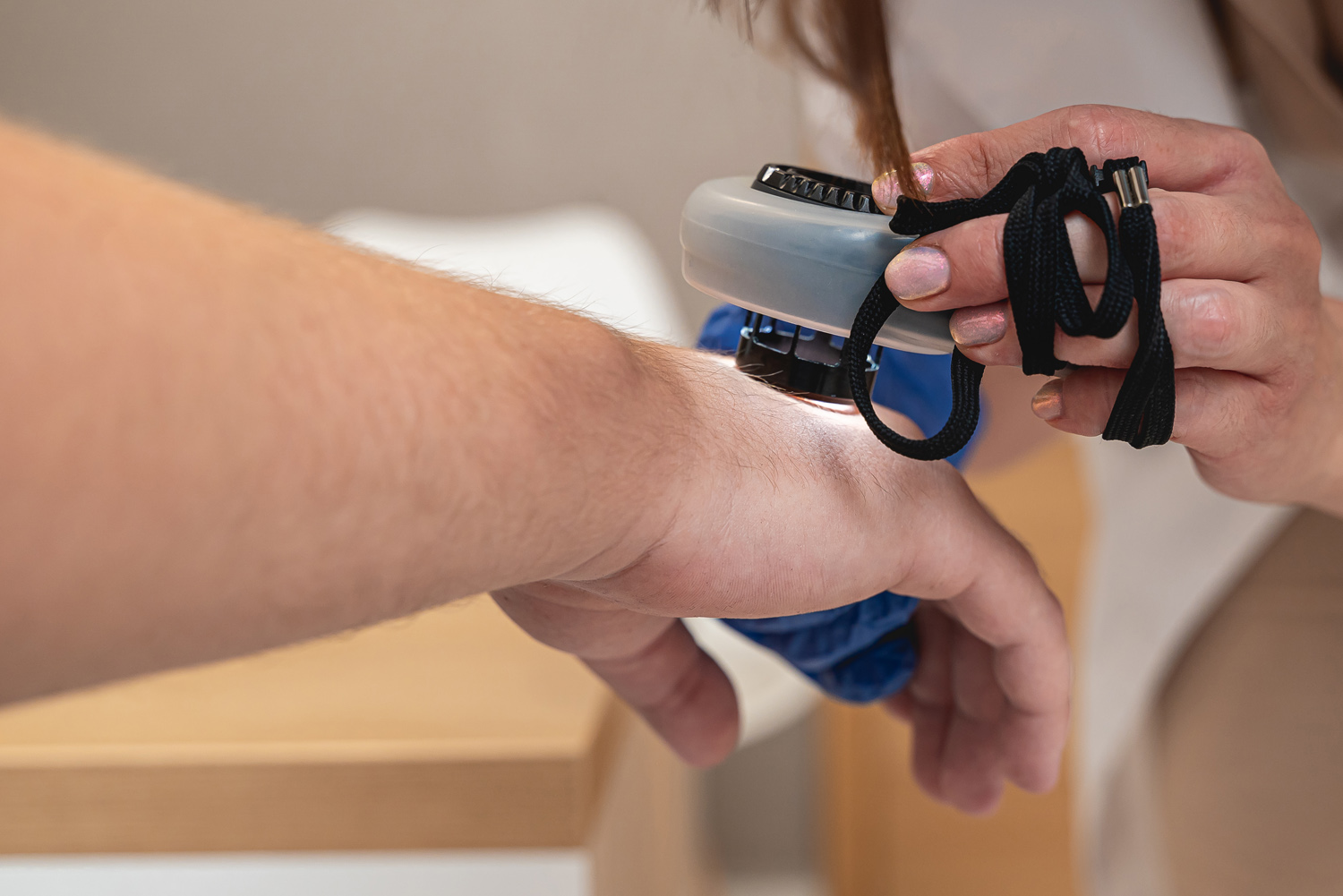
A dermatoscope uses illumination and magnification to help assess moles and other skin lesions. The examination is painless and reveals details that are difficult to assess with the naked eye. Where necessary, moles over the entire skin surface are reviewed. Dermatoscopy can help detect abnormal moles as well as certain precancerous and malignant skin lesions at an early stage. The most important malignant skin tumours include malignant melanoma, basal cell carcinoma and squamous cell carcinoma. Early detection can significantly improve the success of treatment, so regular checks of moles and other skin lesions can be important even if you have no symptoms.
How often you need a check-up depends on your individual risk and your dermatologist’s recommendation. If a suspicious lesion is found that may need histological examination, the clinic provides surgical and plastic surgery care, in which the lesion is removed under local anaesthetic. Mole screening may also be recommended if an existing mole changes in size, shape or colour, or if a new, unusual skin lesion appears. Annual screening is advisable, along with regular ABCD self-checks at home. (Related reading: Dangerous moles: consultant dermatologist Dr. Gerencsér Kinga answers.)
Allergy testing
Skin symptoms are not always allergic in origin. Tests selected on the basis of your medical history can help clarify the possible cause. Allergy testing may be warranted in cases such as urticaria, atopic dermatitis or allergic contact dermatitis. If contact allergy is suspected, an epicutaneous (patch) test applied to the skin may be used, while for certain other allergies a targeted blood test may be appropriate. Where indicated, the prick test available at Tagore Medical Center can also be used to test for inhalant and food allergens. The appropriate testing method is always chosen on the basis of your symptoms and medical history.
Wart treatment
Common warts can be growths covered with a thick horny layer; on the soles of the feet they can also cause pain when walking. If several lesions lie next to each other, a so-called mosaic wart may form. Molluscum contagiosum, commonly known as „water warts”, can appear as small, rapidly spreading skin lesions. The treatment method depends on the type, location and extent of the lesion. Our specialists remove them with a hand instrument (Volkmann curette), by freezing (cryotherapy) or by plasma treatment using electrical heat (Plasmage), under local anaesthetic if needed. Extensive lesions may require several treatments or additional medication. For genital or extensive warts, further laboratory or other investigations may also be warranted.
Removal of fibromas and benign skin growths
Fibromas (skin tags) are benign skin growths of varying size, usually skin-coloured and often on a stalk, that mainly appear in skin folds. Before removal, a medical examination establishes the nature of the lesion. Where appropriate, freezing (cryotherapy) or plasma treatment using electrical heat (Plasmage) can be used, under local anaesthetic if needed. During the specialist dermatological examination, the doctor decides whether the lesion can be removed as an outpatient procedure, or whether surgical removal and histological examination are needed at the clinic. If you have a pacemaker, you must tell us before any procedure, as prior consultation with a cardiologist is required.
Examinations and prices
These examinations can be booked right now, and prices are updated from our booking system. All examinations in this speciality open with one click below the list.
Examinations and prices
Specialist dermatological examination
Detailed medical history, physical examination, targeted examination of complaints, ordering of supplementary tests, initiation of any necessary therapeutic procedures and treatments, advice. · The price shown may vary if you have several complaints!
Dermatology follow-up examination
Available within 2 months of a specialist examination at our clinic, for the problem covered by the previous examination. The price shown may vary for a different problem!
Dermatology follow-up examination for one complaint
Available within 2 months of a specialist examination at our clinic, for the problem covered by the previous examination. The price shown may vary for a different problem!
Dermatology follow-up examination for several complaints
Available within 2 months of a specialist examination at our clinic.
Specialist dermatological examination
Detailed medical history, physical examination, targeted examination of complaints, ordering of supplementary tests, initiation of any necessary treatments, advice. The price shown may vary if you have several complaints!
Specialist dermatological examination and treatment
Specialist dermatological examination for several complaints
Mole screening
The price shown may vary for a full-body examination!
Dermatology consultation about Plasmage treatment
Online dermatology consultation
HPV vaccination and consultation
Specialist consultation and administration of a vaccine supplied by us
Plasmage treatment
Prices are in Hungarian forints (HUF) and include VAT. The laboratory package prices shown include the applicable sample handling or sample collection fee.
Try a different search term, or call our team on +36 20 280 3939 for assistance.
All examinations in this speciality22 items
Basic examinations
-
Specialist dermatology follow-up for a different complaint
HUF 28,990
Within 2 months of a specialist examination at our clinic
- Specialist dermatology follow-up with a 3-month prescription HUF 35,990
- Short dermatology consultation (with prescription) HUF 14,990
-
Specialist dermatological examination and removal of a dermatofibroma under local anaesthetic using PLASMAGE or cryotherapy
HUF 39,990
Cryotherapy is available at Dr. Szlávicz Eszter’s clinic.
-
Specialist dermatological examination and removal of fibromas (skin tags) under local anaesthetic using PLASMAGE or cryotherapy
from HUF 35,990
- 1-2 lesions: HUF 35,990
- 3-5 lesions: HUF 39,990
- 6-10 lesions: HUF 42,990
- Over 10 lesions: individual price
Cryotherapy is available at Dr. Szlávicz Eszter’s clinic.
-
Specialist dermatological examination and removal of molluscum („water warts”) under local anaesthetic using PLASMAGE or a Volkmann curette
from HUF 35,990
- 1-2 lesions: HUF 35,990
- 3-5 lesions: HUF 39,990
- 6-10 lesions: HUF 43,990
- Over 10 lesions: individual price
This procedure is available only at Dr. Gerencsér Kinga’s clinic!
-
Specialist dermatological examination and removal of mosaic warts under local anaesthetic
HUF 41,990
Price per lesion. This procedure is available only at Dr. Gerencsér Kinga’s clinic!
-
Removal of seborrhoeic keratosis (verruca seborrhoica) using PLASMAGE, cryotherapy or a Volkmann curette, under local anaesthetic
from HUF 36,990
- 1 lesion: HUF 36,990
- 2 lesions: HUF 42,990
- 3 or more lesions: individual price
- each additional lesion: HUF 7,000
Cryotherapy is available at Dr. Szlávicz Eszter’s clinic.
-
Removal of actinic keratosis by cryotherapy
from HUF 36,990
- 1 lesion: HUF 36,990
- 2 lesions: HUF 42,990
- 3 or more lesions: individual price
- each additional lesion: HUF 7,000
Cryotherapy is available at Dr. Szlávicz Eszter’s clinic.
-
Specialist dermatological examination and removal of haemangioma under local anaesthetic
from HUF 35,990
- 1-2 lesions: HUF 35,990
- 3-5 lesions: HUF 41,990
-
Specialist dermatological examination and removal of HPV (viral warts) under local anaesthetic
from HUF 36,990
- 1 lesion: HUF 36,990
- 2-3 lesions: HUF 39,990
- 4-10 lesions: individual price
Removal from the genital area:
- 1 lesion: HUF 36,990
- 2-3 lesions: HUF 39,990
- 4-10 lesions: HUF 47,990
This procedure is available only at Dr. Gerencsér Kinga’s clinic!
-
Removal of benign skin lesions on the face using PLASMAGE or cryotherapy under local anaesthetic
Individual price
Individual price based on the specialist’s assessment. Cryotherapy is available at Dr. Szlávicz Eszter’s clinic.
-
Injection of alopecia patches
from HUF 9,000
- 1-2 patches: HUF 9,000
- 3-5 patches: HUF 14,000
-
HPV screening for men
HUF 22,140
Charged in addition to the basic examination
- Chronic wound care, application of an elastic bandage and instruction in its correct use HUF 13,000
- Intramuscular injection HUF 7,000
- Microbiological sampling HUF 8,000
-
Urgent appointment fee when the schedule is fully booked
HUF 15,000
Payable in addition to the examination!
- Foreign body/tick removal, disinfection, dressing HUF 8,000
-
Combined (inhalant and food) prick test
HUF 12,000
Only available with a specialist dermatological examination
-
Prescription writing
HUF 5,500
Prescription writing without consultation or examination; otherwise included in the specialist examination
- Specialist recommendation HUF 7,000
Current fees for all examinations can be found on our price list page at any time.
Frequently asked questions about the dermatology clinic
How should I prepare for the examination?
Bring your previous test results and a list of the medicines and creams you use. If the lesion has disappeared in the meantime, a photo taken earlier can be helpful. The area of skin to be examined should be easily accessible; if your face is being examined, please avoid wearing make-up if possible. For nail problems, removing nail polish makes the examination easier.
Are dermatological procedures painful?
Visual examination and dermatoscopy are usually painless. Sampling, freezing or removal may cause some discomfort. We will explain the procedure and the options for anaesthesia beforehand, and use local anaesthetic on request.
How long does the examination take?
A specialist dermatological examination takes 20 minutes, but the actual time needed depends on the number of complaints and any procedure. When booking, please let us know if you would like to discuss several different problems or would also like a lesion removed.
Can every lesion be removed at the first visit?
The doctor decides whether and how a lesion can be removed based on the examination. A suspicious mole or skin tumour may require care that also involves histological assessment. Some procedures may need a separate appointment.
How much does the examination or treatment cost?
Current fees are listed on our dermatology price list. Fees for the examination, sampling, laboratory analysis and removal may differ; please ask our team in advance about the cost of your planned care.
Do I need a referral for the private dermatology clinic?
No. Our private dermatology clinic can be used without a referral.
Where is the clinic?
- Address
- Tagore Medical Center
Balatonfüred, Horváth-ház, Gyógy tér 3. - Book an appointment
- +36 (20) 280 3939
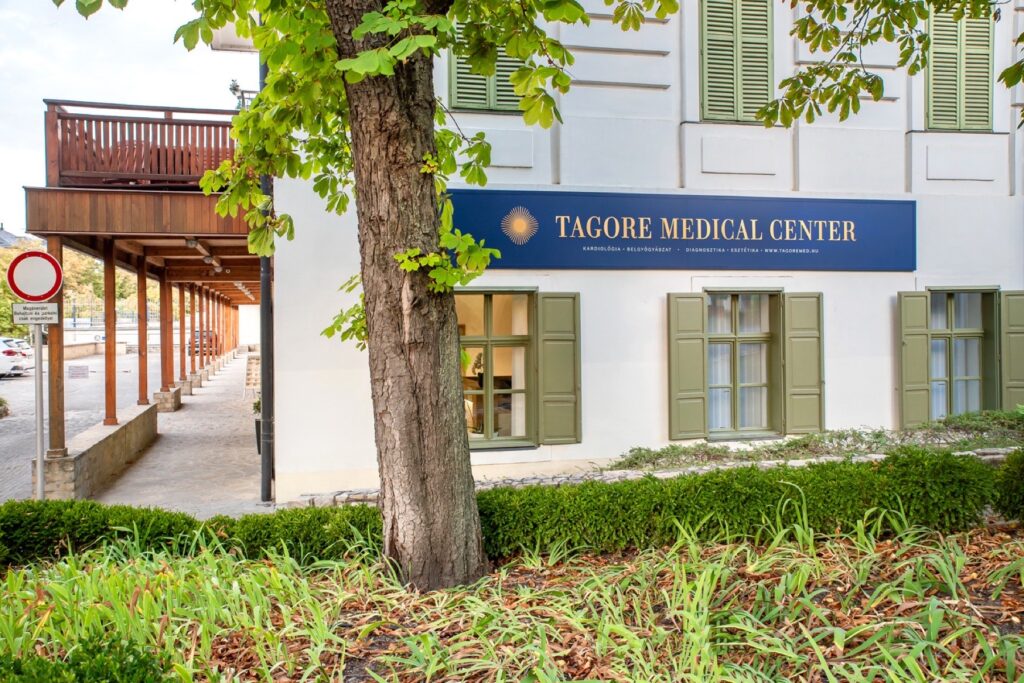
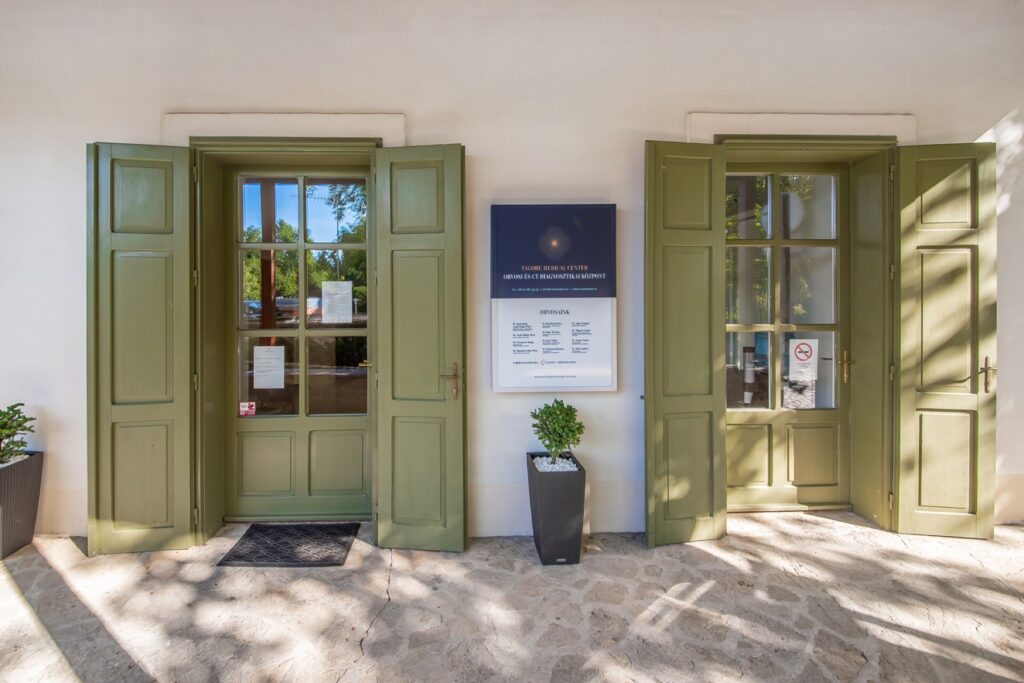
Dermatology in Balatonfüred at Tagore Medical Center
If you need a specialist to examine suspicious moles, manage a chronic skin condition or carry out screening, we look forward to seeing you at our private dermatology clinic in Balatonfüred. Specialist dermatological examinations with immediate removal of benign skin lesions and microbiological sampling are available without a referral. If needed, we also involve doctors from our other specialities.
Book an appointment online at our Balatonfüred clinic, or contact our team on +36 20 280 3939 for more information. When booking, please let us know your symptoms and which examination you are coming for.
Book an appointment!
Early detection can save lives, and we will help you find the right solution.
Tagore Medical Center, Balatonfüred, Horváth-ház, Gyógy tér 3.
This information is general in nature and does not replace a personal medical examination, diagnosis or treatment. If you have symptoms, please consult a specialist.