
Our specialities/Lung function tests
Lung function testing and cardiopulmonary exercise testing (spiroergometry) in Balatonfüred
In cases of shortness of breath, a persistent cough, reduced exercise capacity or known lung disease, lung function testing can provide objective information about how your lungs are working. If symptoms mainly occur during physical activity, cardiopulmonary exercise testing (spiroergometry) examines the respiratory system, the cardiovascular system and the muscles together during exercise. At Tagore Medical Center both resting lung function testing and comprehensive exercise lung function testing (spiroergometry) are available as part of our pulmonology clinic. Besides supporting respiratory investigations, the results can help to assess physical performance objectively and to plan rehabilitation and training intensity.
- Short waiting times
- Experienced, highly regarded specialists
- Modern ultrasound diagnostics and laboratory facilities
- Thousands of satisfied patients every year
- International clinical trial background, the latest therapies
What does a lung function test show?
A lung function test assesses how the lungs work using objective measurements. During the test, a respiratory diagnostic device is used to measure, among other things, the volume and flow of air breathed in and out.
The results can help to assess:
- airflow in the lungs;
- any narrowing of the airways;
- the functional capacity of the lungs;
- changes in how the respiratory system is working;
- the effect of treatment.
Lung function testing can be an important part of investigating and monitoring asthma, COPD and other chronic respiratory diseases, among others.
How is cardiopulmonary exercise testing (spiroergometry) performed?
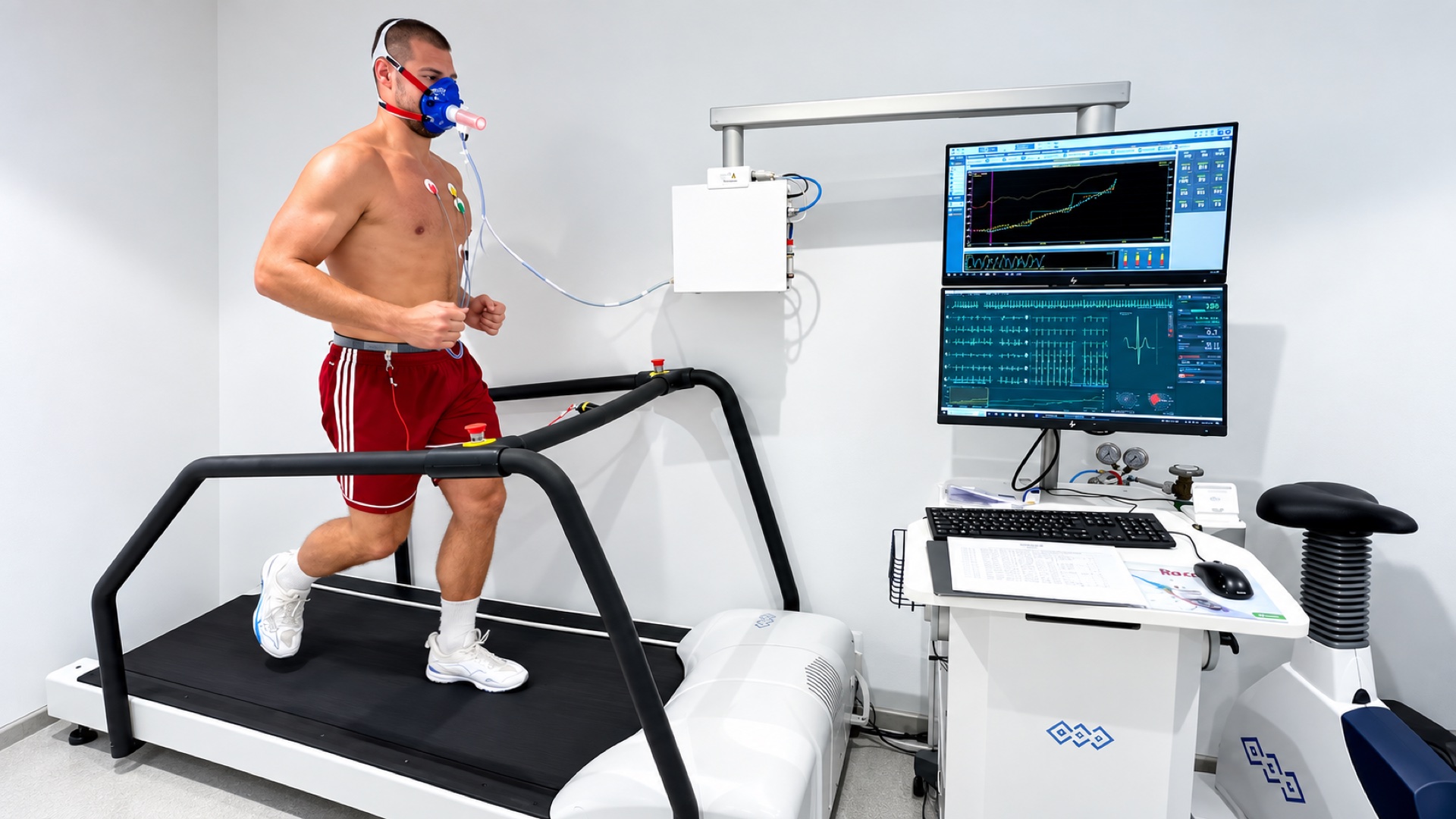
The test is preceded by a respiratory assessment and a check that it is safe to carry out. The patient performs gradually increasing physical exercise on an exercise bike or treadmill. Throughout the test, the characteristics of inhaled and exhaled air are measured continuously through a mask or special breathing system. ECG monitoring is carried out continuously during exercise, and pulse, blood pressure and oxygen saturation are also tracked. The intensity is increased step by step according to your individual exercise capacity and the purpose of the test. After exercise there is a short observation period, during which we continue to monitor how circulatory and respiratory parameters return to normal. Including preparation and evaluation, the whole test usually takes 30 to 40 minutes.
How can lung function testing and spiroergometry help?
When is a lung function test advisable?
A lung function test may be recommended, among other things:
- for persistent or recurring shortness of breath;
- for a persistent cough;
- for breathlessness on exertion;
- for wheezing or chest tightness;
- to monitor known asthma or COPD;
- for respiratory symptoms in smokers;
- to check the effectiveness of treatment for lung disease;
- as part of a pre-operative assessment;
- before starting sport, if respiratory symptoms or reduced exercise capacity are present.
The test result alone does not always provide a definitive diagnosis. The respiratory specialist evaluates the values together with your symptoms, the physical examination and, if necessary, other test results.
What is exercise lung function testing (spiroergometry)?
Cardiopulmonary exercise testing (spiroergometry) examines the body’s complex response to physical exercise. Unlike resting lung function tests, it shows not only how the lungs work at rest but also how the lungs, the heart and blood vessels, circulation, oxygen transport and skeletal muscles work together during exercise.
During the test, breathing and circulation are monitored continuously while the physical load is gradually increased. The measured parameters may include oxygen uptake, carbon dioxide output, minute ventilation, breathing volumes, pulse, ECG, blood pressure, oxygen saturation, maximum physical performance, and ventilatory and exercise thresholds.
One of the key results of the test is VO₂max, which shows how much oxygen the body can take up, transport and use during maximal physical exercise. It is one of the most important objective measures of cardiorespiratory fitness.
When is cardiopulmonary exercise testing (spiroergometry) recommended?
Exercise lung function testing can be particularly useful:
- for shortness of breath on exertion or of unknown origin;
- to investigate unusual fatigue and reduced physical performance;
- if exercise capacity deteriorates significantly when walking, climbing stairs or playing sport;
- to determine functional status in known chronic lung disease;
- in COPD;
- for planning pulmonary rehabilitation;
- for risk assessment before major surgery;
- for functional assessment before lung surgery;
- in heart failure, to assess exercise capacity and risk;
- to measure athletes’ performance objectively;
- to assess the exercise capacity of people starting sport;
- to help determine personalised training zones and training intensity;
- to investigate reduced exercise capacity or shortness of breath persisting after an infection.
An important advantage of spiroergometry is that it can help clarify whether exercise capacity is limited mainly by respiratory, circulatory or other functional factors.
What can we learn from the results of spiroergometry?
Spiroergometry does not give a single measurement but analyses the whole physiological response to exercise. Among other things, it can determine maximal oxygen uptake, cardiorespiratory fitness, physical performance, the ventilatory response to exercise, breathing reserve, the pulse and circulatory response to exercise, and the exercise zones that can be used to set the optimal training intensity.
Where exercise capacity is reduced, the results can also help to judge whether the main limiting factor is respiratory, cardiovascular or peripheral, for example muscular.
Spiroergometry for athletes
Cardiopulmonary exercise testing is not only for investigating illness. In healthy people who exercise regularly or are starting sport, it provides an objective measure of physical performance and cardiorespiratory fitness.
Knowing your VO₂max and exercise thresholds can help determine your current fitness level, plan individual training intensity, refine training zones, track the results of a training programme and avoid excessive or inappropriate training loads. The result should always be interpreted in the light of age, fitness level, sport and individual goals.
When can the exercise test not be performed?
Spiroergometry is a controlled exercise test carried out under medical supervision, but there are conditions in which the test must be postponed or other care is needed. These include, among others, an acute feverish or respiratory infection, severe shortness of breath even at rest, new or unstable chest pain, a recent serious cardiovascular event, significant untreated arrhythmia, and musculoskeletal conditions that do not allow safe exercise. The specialist always decides whether the test can be performed.
Examinations and prices
These examinations can be booked right now, and prices are updated from our booking system. All examinations in this speciality open with one click below the list.
Examinations and prices
Spiroergometry (exercise lung function) comprehensive test
Prices are in Hungarian forints (HUF) and include VAT. The laboratory package prices shown include the applicable sample handling or sample collection fee.
Try a different search term, or call our team on +36 20 280 3939 for assistance.
How should I prepare for the examination?
For the exercise test, it is best to arrive in comfortable sportswear and trainers. Before the test, avoid eating a large meal immediately beforehand and do not do any intensive training on the day of the test. Please tell us about any medicines you take regularly, bring your previous respiratory, cardiology and imaging results with you, and let us know if you have had an infection, fever, chest pain or worsening shortness of breath in the past few days.
Do not stop taking your regular medication on your own initiative. If any medication needs to be adjusted because of the test, your treating doctor will advise you in advance.
Frequently asked questions about lung function testing and spiroergometry
What is the difference between a lung function test and spiroergometry?
A resting lung function test mainly measures airflow and breathing parameters of the lungs at rest. Spiroergometry, by contrast, examines breathing, the cardiovascular system and oxygen utilisation together during physical exercise. The two tests therefore do not replace each other, but can complement each other for different clinical questions.
How long does spiroergometry take?
Including preparation, exercise and observation, the whole test usually takes about 30 to 40 minutes.
Is the test painful?
No. The test is non-invasive. As the physical load increases, you may naturally experience tiredness, breathlessness or muscle fatigue.
How much does a lung function test cost?
The current price of lung function testing can be found in our pulmonology price list. Resting lung function testing and comprehensive exercise lung function testing are separate services; cardiopulmonary exercise testing (spiroergometry) is a more complex examination, so its fee differs from that of a simple resting lung function test.
What does a pulmonology examination include?
During a pulmonology examination, the respiratory specialist reviews your symptoms and medical history, carries out a targeted physical examination and then determines the further diagnostic steps needed. Depending on your symptoms, a lung function test, chest X-ray, laboratory or other tests may also be needed as part of the pulmonology clinic.
Is a respiratory examination needed before spiroergometry?
The indication for the exercise test and whether it can be carried out safely are determined on the basis of a specialist assessment. It is therefore a good idea to bring your previous results and a list of the medicines you take regularly.
Is spiroergometry worthwhile for healthy people?
Yes. For athletes and healthy people starting sport, the test can also be used to determine physical performance, VO₂max and exercise zones objectively.
Where is the clinic?
- Address
- Tagore Medical Center
Balatonfüred, Horváth-ház, Gyógy tér 3. - Book an appointment
- +36 (20) 280 3939


Lung function testing and spiroergometry at Tagore Medical Center
If you are seeking investigation for persistent shortness of breath, reduced exercise capacity or known lung disease, or would like an objective assessment of your physical performance, we look forward to welcoming you at our clinic in Balatonfüred. At the Tagore Medical Center pulmonology clinic, the specialist respiratory examination can be supplemented as needed by resting lung function testing, chest X-ray, cardiopulmonary exercise testing and further tests. Where necessary, we also involve doctors from our other specialties.
Book an appointment online, or contact our team on +36 20 280 3939 for assistance.
Book an appointment!
Early detection can save lives, and we will help you find the right solution.
Tagore Medical Center, Balatonfüred, Horváth-ház, Gyógy tér 3.
This information is general in nature and does not replace a personal medical examination, diagnosis or treatment. If you have symptoms, please consult a specialist.