
Our specialities/Neurology
Private neurology clinic in Balatonfüred
If you have recurrent headaches, persistent numbness, tremor or worsening memory, a neurologist can help identify the cause. At the private neurology clinic of Tagore Medical Center in Balatonfüred, we support patients living with neurological conditions through specialist assessment and personalised treatment.
- Expertise of Dr. Imre Piroska, neurologist and head of department
- Assessment that takes into account your symptoms, medical history and previous treatments
- Regular follow-up and adjustment of medication as needed
- Cooperation with related specialties to establish the cause of your symptoms
- Immediate arrangement of the onward care pathway when needed
When should you see a neurologist?
Neurology is the medical specialty concerned with the nervous system. It deals with the diagnosis, treatment and management of diseases of the brain, spinal cord, peripheral nerves and the junction between nerves and muscles. Nervous system disorders can affect sensation, movement, balance, speech or memory.
Read moreShow less
A neurological examination may be advisable, among other things:
- for recurrent or worsening headaches or migraines that disrupt everyday life;
- for persistent or recurrent numbness in the limbs, reduced sensation, or burning or shooting pain;
- for tremor, slowness of movement, muscle stiffness or gradually developing unsteadiness when walking;
- to investigate recurrent dizziness and balance problems;
- for worsening memory, difficulty with orientation or cognitive changes affecting everyday tasks;
- for recurrent or gradually developing double vision, visual field problems or speech difficulties;
- for regular management of Parkinson’s disease, multiple sclerosis and other chronic or inflammatory neurological diseases;
- for monitoring a known neurological condition or for care following a previous stroke.
If you experience sudden weakness on one side of the body, facial drooping, speech or vision problems, or an unexpected, extremely severe headache, call 112 immediately. Do not wait for a clinic appointment, even if the symptoms resolve within a short time.
Our specialists
-
 Dr. Imre Piroska
Consultant neurologist and head of department Profile
What happens during a neurological examination?
The specialist first asks you in detail about when your symptoms started, what they are like and how they have changed. They review your history, previous results and medicines, including their effects and any side effects. Family medical history may also be important, so please mention if anyone in your family has had, for example, a stroke, Parkinson’s disease, dementia or another neurological condition.
During the physical examination, the doctor checks muscle strength, muscle tone, reflexes, sensation, coordination and gait. Depending on your symptoms, they may also examine eye movements, facial function, speech, attention and memory.
If necessary, laboratory, imaging or electrophysiological tests may be recommended. CT or MRI can help detect structural changes in the nervous system, EEG examines the electrical activity of the brain, and nerve conduction studies (ENG) and EMG assess the function of the peripheral nerves and muscles. The neurologist decides whether these are needed; they are carried out at a separate diagnostic facility.
At Tagore Medical Center, where indicated, the assessment can be complemented by a specialist cardiology examination, echocardiography (heart ultrasound), 24-hour ECG or blood pressure monitoring, or a carotid artery ultrasound. For certain symptoms, a longer-term ECG event recorder may also be appropriate. Based on the results, we discuss treatment and follow-up. Under current terms, a repeat consultation within 2 months of a specialist neurological examination at our clinic can be booked as a follow-up examination.
How can neurology care help?

Investigation of headache and migraine
The nature, frequency and accompanying symptoms of the pain help establish the cause of a headache. Migraine is often associated with throbbing pain, nausea and sensitivity to light and sound. Treatment aims to relieve attacks and, where appropriate, to reduce their frequency.
A headache diary helps track attacks and possible triggers. It is worth noting when the headache occurs, how long it lasts, how severe it is and which medicines you take. Taking painkillers too often can itself sustain headaches, so we also review your medication habits. A new type of headache, a sudden or unusually severe headache, or a headache accompanied by neurological symptoms such as weakness or speech or vision problems may require urgent medical assessment.
Numbness and nerve pain
Persistent numbness, tingling, reduced sensation or burning pain in the limbs may be a sign of peripheral nerve damage. There can be various underlying causes, such as diabetes, nerve injury or vitamin deficiency. The location of the symptoms and the examination findings help determine the next steps.
The assessment may include targeted laboratory tests and nerve conduction studies (ENG) or EMG. Treatment aims to address the underlying condition and reduce nerve pain; if there is muscle weakness or impaired movement, rehabilitation may also be necessary. Numbness and sensory disturbances are not always caused by peripheral nerve disease: problems in the spinal cord or central nervous system can cause similar symptoms, so we decide on further tests based on the results of the neurological examination.
Investigation of memory and movement disorders
Increasing forgetfulness does not always mean dementia. Medication side effects, mood problems or other illnesses can also contribute to the symptoms. The course of the symptoms, changes in everyday independence and, if needed, memory tasks help in the assessment. It can be helpful if a close relative also describes the changes they have noticed.
In cases of tremor, slowness of movement and muscle stiffness, the neurologist assesses the nature and possible cause of the movement disorder. In Parkinson’s disease, treatment aims to relieve symptoms and support everyday activity. We assess the effect of medication and any changing symptoms at regular follow-up visits.
Examinations and prices
These examinations can be booked right now, and prices are updated from our booking system. All examinations in this speciality open with one click below the list.
Examinations and prices
Specialist neurological examination
Review of medical history and symptoms, targeted physical examination, initiation of therapeutic procedures and treatments, ordering of necessary additional tests
Neurological follow-up examination
Available within 2 months of a neurological examination at our clinic
Prices are in Hungarian forints (HUF) and include VAT. The laboratory package prices shown include the applicable sample handling or sample collection fee.
Try a different search term, or call our team on +36 20 280 3939 for assistance.
All examinations in this speciality8 items
Basic examinations
-
Online consultation
HUF 26,990
Review of medical history, discussion of symptoms, treatment recommendations, prescriptions
-
24-hour Holter ECG
HUF 25,000
24-hour ECG monitoring with evaluation (3, 7 or 12 leads, BTL H600 Holter). The evaluation takes 2 weeks.
-
2-week ECG event recorder: Pulsebit
HUF 16,000
A method for recording the heart rhythm during symptoms over a 2-week period, using a portable device that does not need to be worn continuously, with evaluation by a specialist cardiologist (Pulsebit)
-
Prescription writing
HUF 5,500
Prescription writing without consultation or examination; otherwise included in the specialist examination
- Preparation of an individual equity (hardship) application HUF 7,000
- Specialist recommendation HUF 7,000
- Second opinion HUF 7,000
- Additional examination for multiple complaints HUF 7,000
Current fees for all examinations can be found on our price list page at any time.
Frequently asked questions about the neurological examination
How should I prepare for the examination?
Please bring previous results, discharge summaries and an exact list of your medicines with their doses. Make a note of when your symptoms started, how often they occur and what affects them. For headaches, a symptom diary is also useful.
How long does the examination take?
The examination usually takes 20 minutes; a follow-up examination may take less.
Is an MRI or CT scan always needed?
No. Based on your symptoms and the physical examination, the neurologist considers whether imaging is needed and which method can answer the clinical question. These are not an automatic part of the consultation.
Does forgetfulness always mean dementia?
No. Memory problems can have many causes. If the change is persistent, getting worse or making everyday activities more difficult, it is worth having it investigated. If possible, come to the examination with a relative who knows how the symptoms have developed.
When should I seek urgent help?
If you experience new, sudden weakness on one side of the body, speech difficulties, facial drooping, loss of vision or an extremely severe headache, call 112 immediately. Symptoms that resolve within a short time may also require urgent care. Do not drive yourself to hospital.
How much does the examination or follow-up cost?
Current fees can be found in the neurology price list. Additional tests may incur separate costs. When booking, please let us know if you have previously attended our neurology clinic.
Do I need a referral?
You can attend our private clinic with a prior appointment. If another specialist has recommended the examination, please bring their recommendation and any related results with you.
Where is the clinic?
- Address
- Tagore Medical Center
Balatonfüred, Horváth-ház, Gyógy tér 3. - Book an appointment
- +36 (20) 280 3939

Neurology in Balatonfüred at Tagore Medical Center
If you are looking for specialist help to investigate persistent or recurrent neurological symptoms, or to manage a known condition, we look forward to welcoming you at our private neurology clinic in Balatonfüred. Where necessary, we also involve doctors from our other specialties.
Book an appointment online, or contact our team on +36 20 280 3939 . Please let us know whether you are coming for a first examination or a follow-up.
Book an appointment!
Early detection can save lives, and we will help you find the right solution.
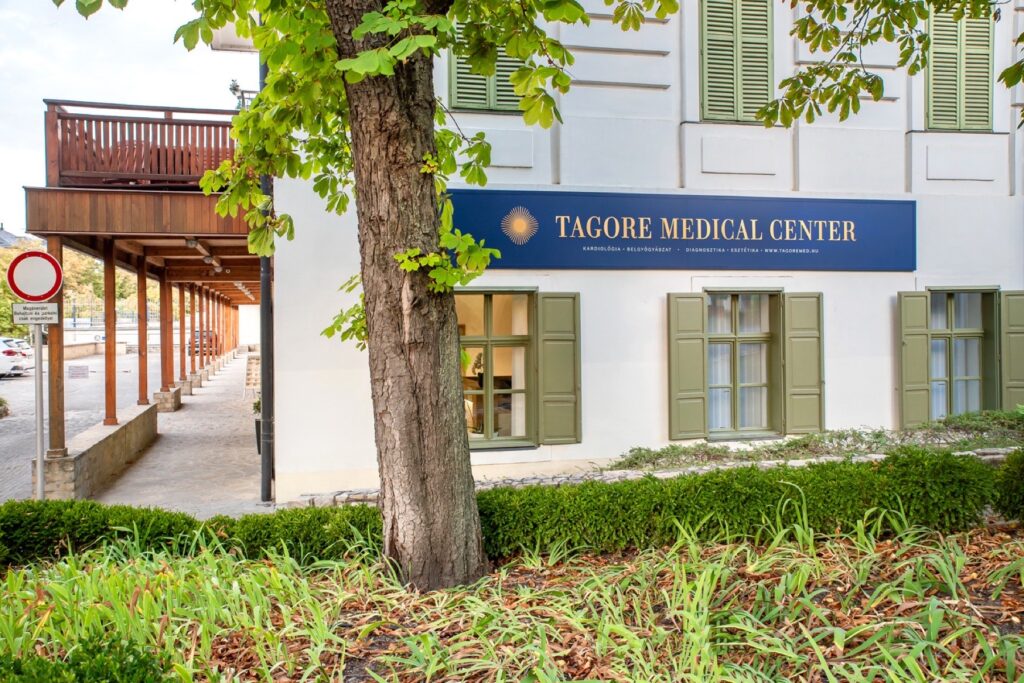
Tagore Medical Center, Balatonfüred, Horváth-ház, Gyógy tér 3.
This information is general in nature and does not replace a personal medical examination, diagnosis or treatment. If you have symptoms, please consult a specialist.